Subscribe to receive our daily tech reviews
Lorem ipsum dolor sit amet, consectetur adipiscing elit ut liqua purus sit amet luctus venenatis, lectus magna.


Indian single malt is having a moment, Indri wants to make it last
Indian single malt is stepping onto the global stage. Indri is leading the charge with distinctly Indian whisky, bold expressions and a mission to change how the world sees spirits from India.
This article contains affiliate links, which means we may earn a small commission if you make a purchase through them, at no extra cost to you.
For longer than I can remember, the words single malt have conjured up a fairly predictable image: Scotland, centuries-old distilleries and bottles designed to command attention from the back bar.
Now, India is complicating that picture.
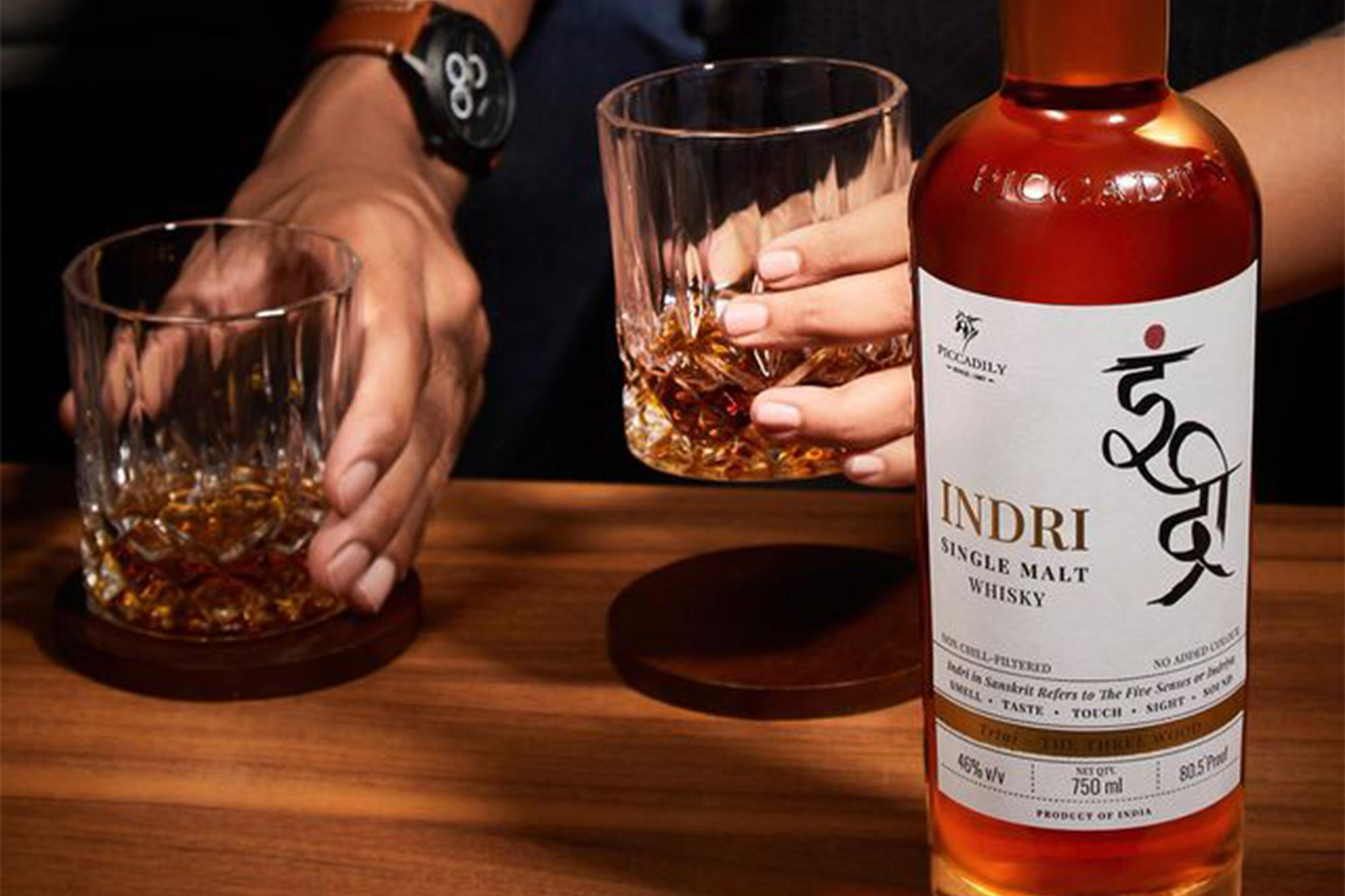
Indian single malt has finally earned a place in everyday conversation among whiskey connoisseurs and Indri is the one pushing it forward. Produced in the village of the same name in northern India, Indri has grown from its flagship triple-cask whisky into cask-strength, peated and limited-edition expressions, all while leaning into its Indian identity.
“What also makes Indri special is the way we proudly declare Indri in Hindi on the bottle, on the label, which is very proudly Indian,” Madhu Kanna, head of international sales at parent company Piccadily, told Nakhra.
Even the name itself is intentional.
“The word Indri itself in Sanskrit means the five senses. It also means the name of the village where our distillery is located,” Kanna said. “And every expression carries an Indian name and an Indian story to it, and a heritage to it.”
For Indri, its desi identity is not something to tone down. While the whisky uses techniques familiar to the single malt world, the grain, climate and even the design of the bottle itself give the brand a distinctly South Asian foundation.
Buy: Indri Whiskey
It starts with what goes into the glass
Ask Kanna what separates Indri from other Indian single malts, and he starts with the whisky itself.
“I think what sets Indri apart from the rest of the other Indian single malts is majorly the product itself,” he said. “The first expression that we launched from the Indri family was a triple cask expression.”
But the casks are only one part of the equation. Kanna also mentions to the climate.
“The summers go up to 120, and the winters go down to 32 Fahrenheit,” he said. “What happens with that extreme temperature is that we extract a lot of flavors from the barrel into our liquid during the extreme summers.”
During colder periods, he explained, those flavors integrate, resulting in what he calls “a well-rounded whisky.”
Then there is the barley.
“The Indian barley has a higher protein and a higher enzyme content,” he said. “So we get a very rich mouthfeel whisky and rich fruity notes to our whisky naturally that comes from the barley.”
Indri’s signature triple cask was partly born from necessity
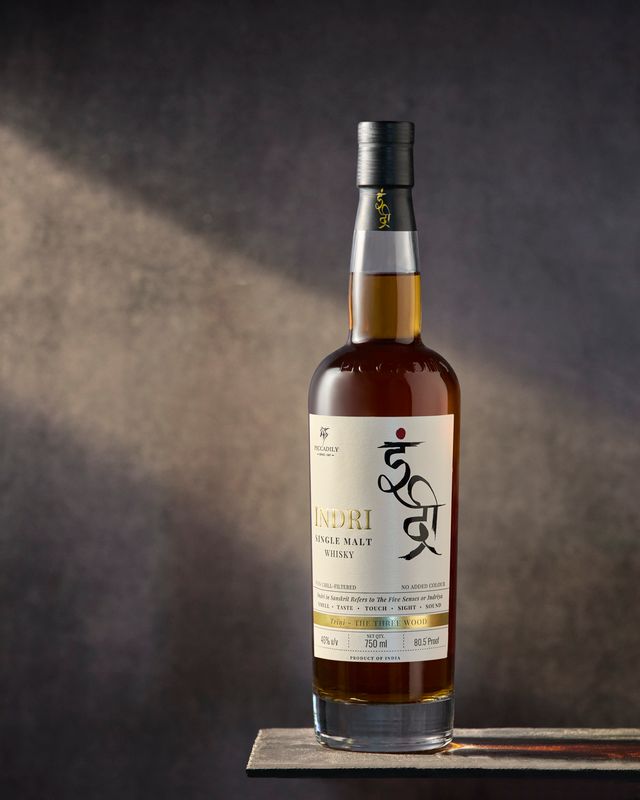
The story behind Indri's first expression is anything but traditional.
The plan was always to mature the liquor in ex-bourbon barrels, but Indri had a slight problem trying to make this happen.
“There was a point where we couldn’t get access to bourbon casks because there was such a huge demand for bourbon casks,” Kanna recalled.
So Indri pivoted to red wine casks.
“That’s when we went and bought some red wine casks,” he said. “And then, when the supply resumed, we continued with both bourbon and red wine because we saw that the French red wine casks also gave the Indian malt spirit a nice character.”
Sherry casks were the final prart.
“We didn’t have a plan to do a triple cask,” Kanna said. But once the team had whisky matured across bourbon, red wine and sherry casks, it decided to bring “the best of what we have” together.
The answer became Trini.
“Putting your best foot forward, and that’s how the trinity or the triple cask came in,” he said. “It’s like giving out everything that you can, and then let’s see what happens.”
Buy Trini: $54.99
What came next? Whisky lovers lead the way
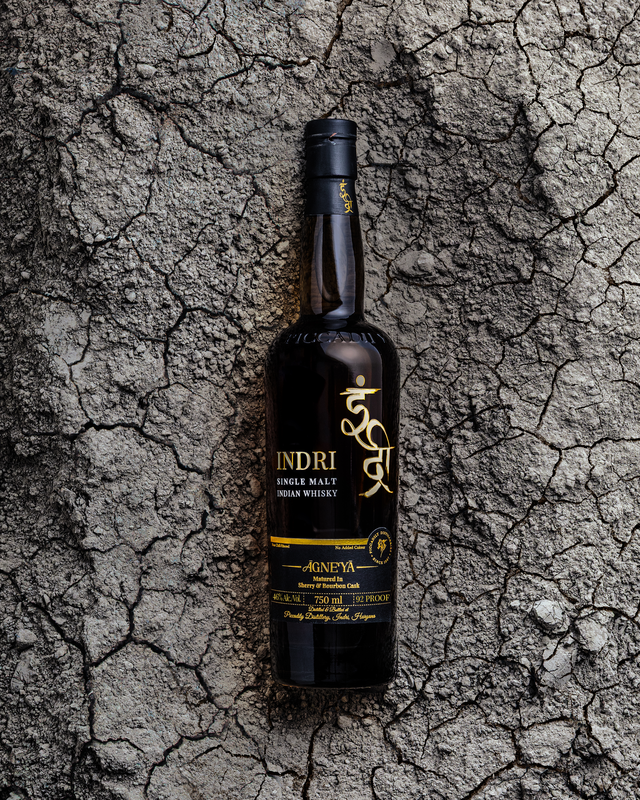
Indri’s newer expressions have often started with questions from whisky drinkers themselves.
“Like a distillery should do, we create our expressions on what we hear from the market,” Kanna said.
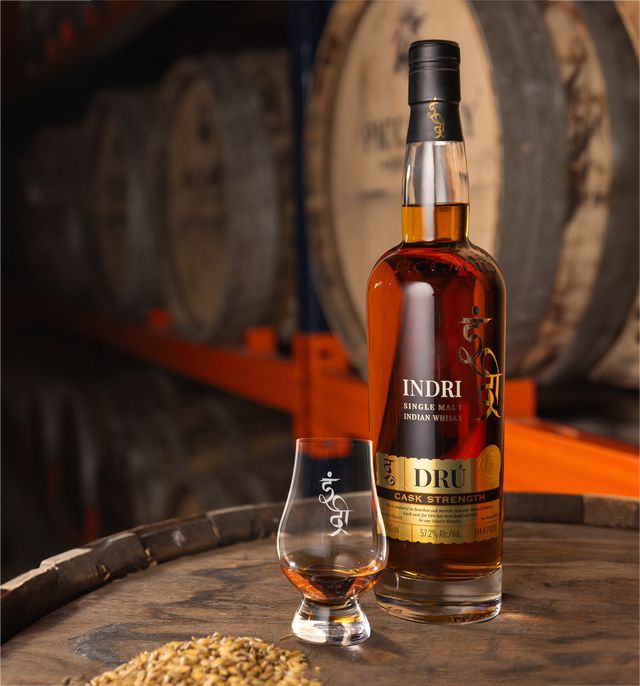
After Trini launched, drinkers wanted to know what Indri would taste like as a bourbon-cask whisky on its own. The answer became Dru, its cask-strength expression.
Buy Dru: $93.99
“We decided we will do a bourbon-finished whisky, just a bourbon-cask-matured whisky,” Kanna said. “But we will bottle it at cask strength.”
Then came requests for a deeper, darker flavor.
“When you see peated whiskies, people always think of iodine, seaweed, sea salt, ash kind of character,” he said. “So we wanted to do something which is approachable by a non-peat lover also.”
That became Agneya, which marries peated bourbon-cask whisky with unpeated sherry-cask whisky.
Buy Agneya: $65.99
“There is peat, but it is more of the heathery, grassy, charcoal, smoked bacon kind of peat in it,” Kanna said.
“All these expressions are created on the basis of what whisky lovers, single malt followers and Indri lovers come back and tell us: ‘What’s next? Are you doing this?’”
The Diwali bottle tells a story
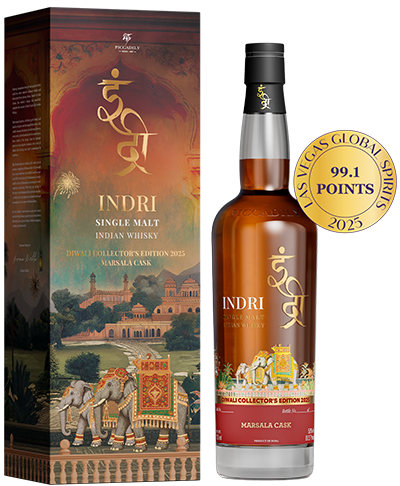
One thing that immediately stood out to me is the brand’s annual Diwali Collector’s Edition. Each bottle looks like a special collector’s edition, and the story behind it is even more special.
“We were thinking we should do something very special, which is also truly Indian,” Kanna said.
“We said that we should create an expression that commemorates and celebrates India. At the same time, we wanted to create an expression that also puts the best of our liquids every year.”
The packaging is equally deliberate. Indri collaborated with designer Krsnaa Mehta, founder of India Circus, with a clear brief.
“The first year we had peacock, which is the national bird of India. Next year we had the tiger, and the last year we had the elephant,” he said.
There has been one less glamorous challenge: getting a Diwali bottle onto global shelves in time for Diwali.
“People started making fun that, hey, it’s beyond Christmas and you’re coming with the Diwali edition,” Kanna said of previous delays.
For 2026, the goal is to have bottles available internationally ahead of the festival.
“We have taken effort so that the product is in the shelves at least two to three weeks before Diwali, not only in India but across the world.”
As for the liquid itself, Kanna would only tease: “This year it’s going to be a totally different cask coming off.”
Indian whisky still has a perception problem
Kanna becomes most animated when the conversation turns to how Indian spirits are viewed abroad.
“India was never considered to be a country who makes quality spirits,” he said. “The reason was, it’s a lot to do with history, a lot to do with colonization, a lot to do with the GDP of the country.”
For many, the surprise begins with discovering that India has a drinking culture at all, according to Kanna — which is something shocking to hear as a South Asian who loves to drink.
“Many people even today come and ask, ‘Do Indians drink?’” Kanna said.
Then comes another reaction.
“There is a surprise to hear single malt from India. How is that even possible?”
He did say, though, that there have been questions that are more openly prejudiced.
“I have had stories or questions about people coming and making fun of, ‘Hey, do you use water from the Ganges?’” he said. “And so there is so much of preconceived prejudice against the product from India.”
Kanna wants drinkers to judge what is in front of them instead.
“I would invite people to keep prejudices out of mind and start appreciating a product for what it is and for what it offers for the value,” he said.
That also means rethinking whisky’s obsession with prestige.
“A few people talk about, ‘Oh, I’m drinking a 40-year-old whisky or a 50-year-old whisky,’ and they want to put it on the table,” he said. “But seldom do people honestly tell, am I drinking it for prestige ... or am I drinking it because I’m enjoying it?”
“I want people to appreciate a product for what it is,” Kanna said. “Today, single malts are made around the world, and I think people should awake to that fact.”
An Indian whisky in every bar
According to Kanna, roughly 70% of what the company produces is consumed in India, but there is a market for it abroad as well.
“There is a huge appreciation from your home country to buy a product that’s made in India,” he said, adding that knowledge of single malt among Indian consumers is also growing.
But where does he see this going?
“I want to see a bottle of Indri in every bar around the world,” Kanna said. “If there can be a bourbon, a Scotch, an Irish whiskey in every bar around the world, I want Indri to be the Indian whisky in every bar around the world.”
That vision, though, is far bigger than one brand.
“We want to be an aspirational brand for all other young Indian quality-crafted brands,” he said.
Perhaps that is the larger story of Indian single malt right now.
Indri does not want consumers to taste its whisky and marvel that something this good could have come from India.
It wants India on the label to become part of the reason they picked up the bottle in the first place.