Subscribe to receive our daily tech reviews
Lorem ipsum dolor sit amet, consectetur adipiscing elit ut liqua purus sit amet luctus venenatis, lectus magna.


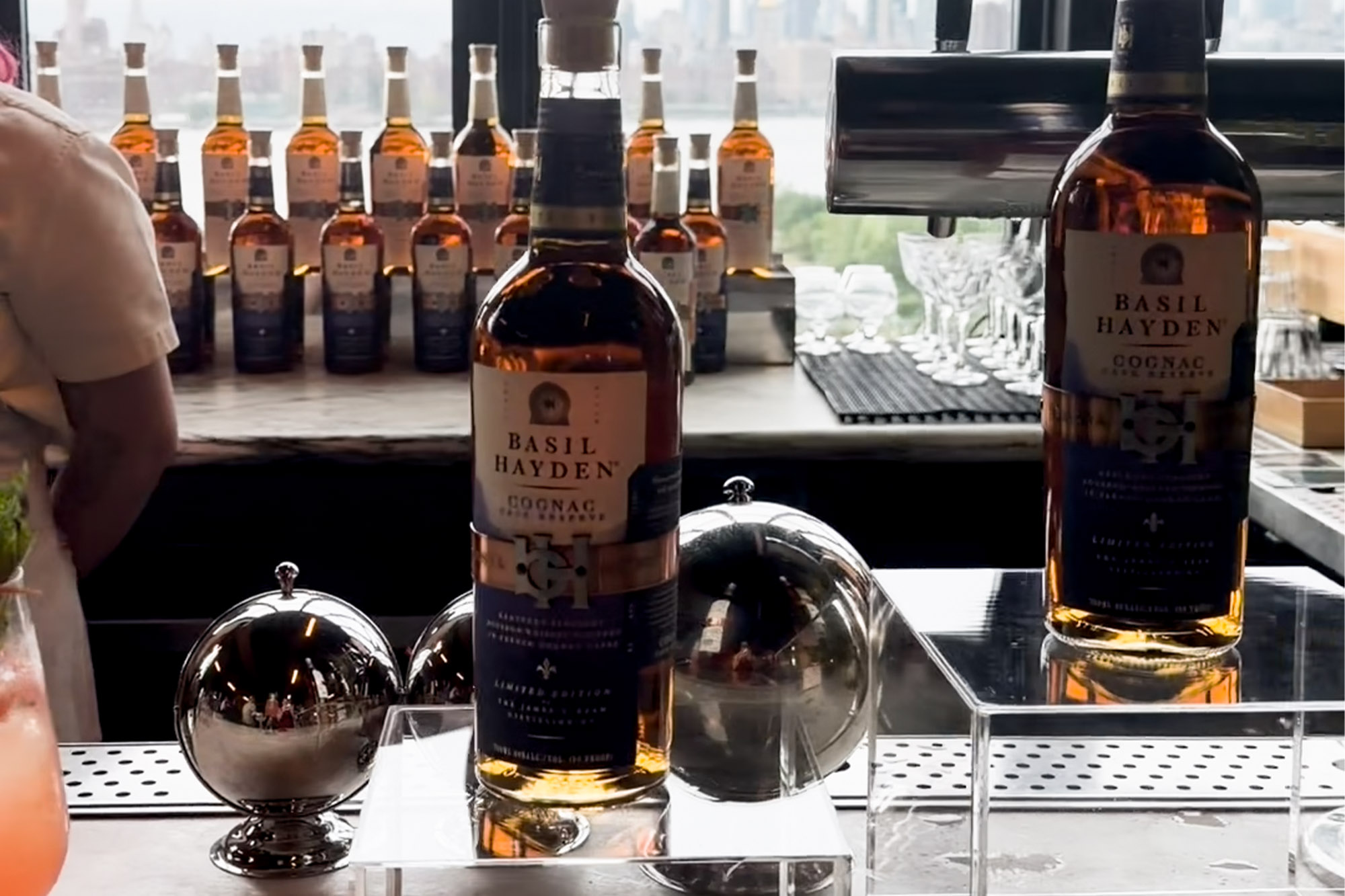
Basil Hayden’s Cognac Cask Reserve Is Bourbon With a French Accent
More experiment than tradition, Basil Hayden Cognac Cask Reserve brings Kentucky bourbon and decades-old French Cognac casks together in a fruit-forward, distinctly transatlantic pour.
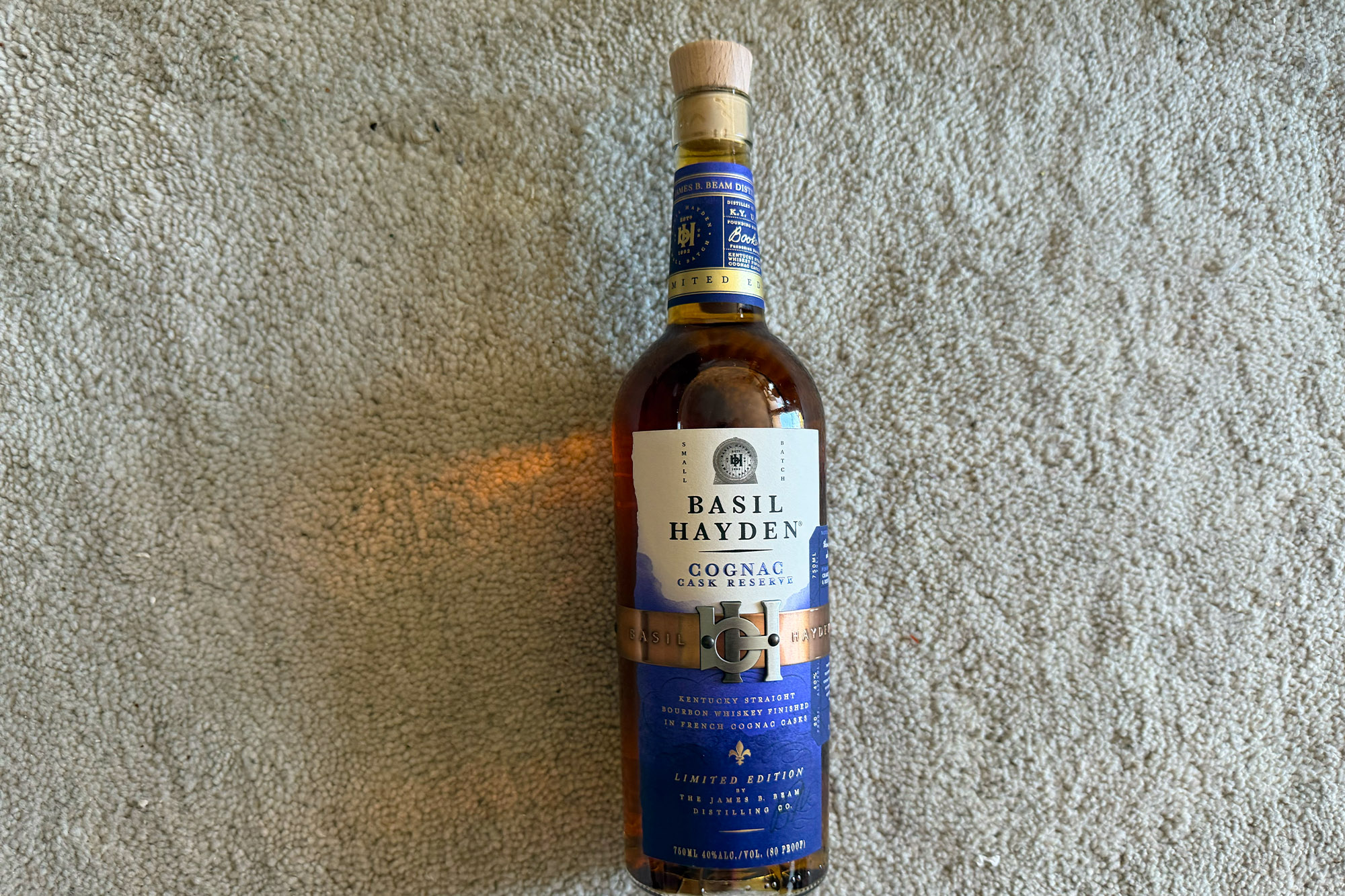
Bourbon and Cognac are both spirits with rules — and quite a few of them. So taking Kentucky whiskey and finishing it in decades-old French Cognac casks sounds almost unrealistic or truly inspired.
Earlier this month, Basil Hayden released Cognac Cask Reserve, a limited-edition bourbon with all the trappings of a luxury-whiskey pitch: Kentucky bourbon, French oak, old Cognac barrels, and enough talk of refinement to keep a marketing department occupied for weeks.
BUY Basil Hayden Cognac Cask Reserve: $49.09
What matters, of course, is what ended up in the glass.
Cognac Cask Reserve begins with Basil Hayden’s high-rye bourbon, bottled at the brand’s customary 80 proof, before being finished in French oak casks that previously held Cognac for 20 to 25 years. It is the first Basil Hayden release to push the brand’s bourbon directly into the flavor territory of another spirit.
Bourbon and Cognac otherwise come from very different worlds. Bourbon is built around grain — at least 51% corn — and matured in new charred oak, while Cognac begins with grapes and follows a tightly regulated French production system before spending years in oak.
The obvious connection is the barrel.
By the time these casks see Basil Hayden, they have already spent decades holding grape brandy. The oak has mellowed, and the barrels have taken on layers of fruit, spice, and Cognac character along the way. Finishing bourbon in them brings some of that history with it.
On the nose, the Cognac influence arrives first. Grape, prune, and dried apricot sit over vanilla and caramel, with a little oak and rye spice underneath. It smells more vinous than a standard bourbon, but not so much that the whiskey disappears.
That distinction carries straight onto the palate. Grape and prune lead, with a touch of dried apricot underneath, before the fruit turns darker and more vinous. Ripe grape and deep plum sit over soft oak and baking spice, while Basil Hayden’s familiar vanilla, caramel, oak, and rye spice remain underneath. The Cognac influence is pronounced enough that I would expect this to stand out in a blind tasting. Whether that is appealing depends largely on how much you enjoy grape-driven spirits to begin with.
The texture is where the whiskey becomes more complicated. At 80 proof, it can feel a bit thin, yet there is still enough ethanol grip to give it a noticeable bite. The result is an odd combination of heat without much weight. I kept wondering what a higher-proof expression — or even a cask-strength release — might have done for it. The flavors are there; I just wanted more body and nuance behind them.
At $49.99, though, that criticism becomes easier to forgive. This is not a $100 bottle asking you to admire the French oak and convince yourself that subtlety equals luxury. Fifty dollars feels fair for an experiment this distinctive, particularly if Cognac, wine, or darker fruit flavors already appeal to you.
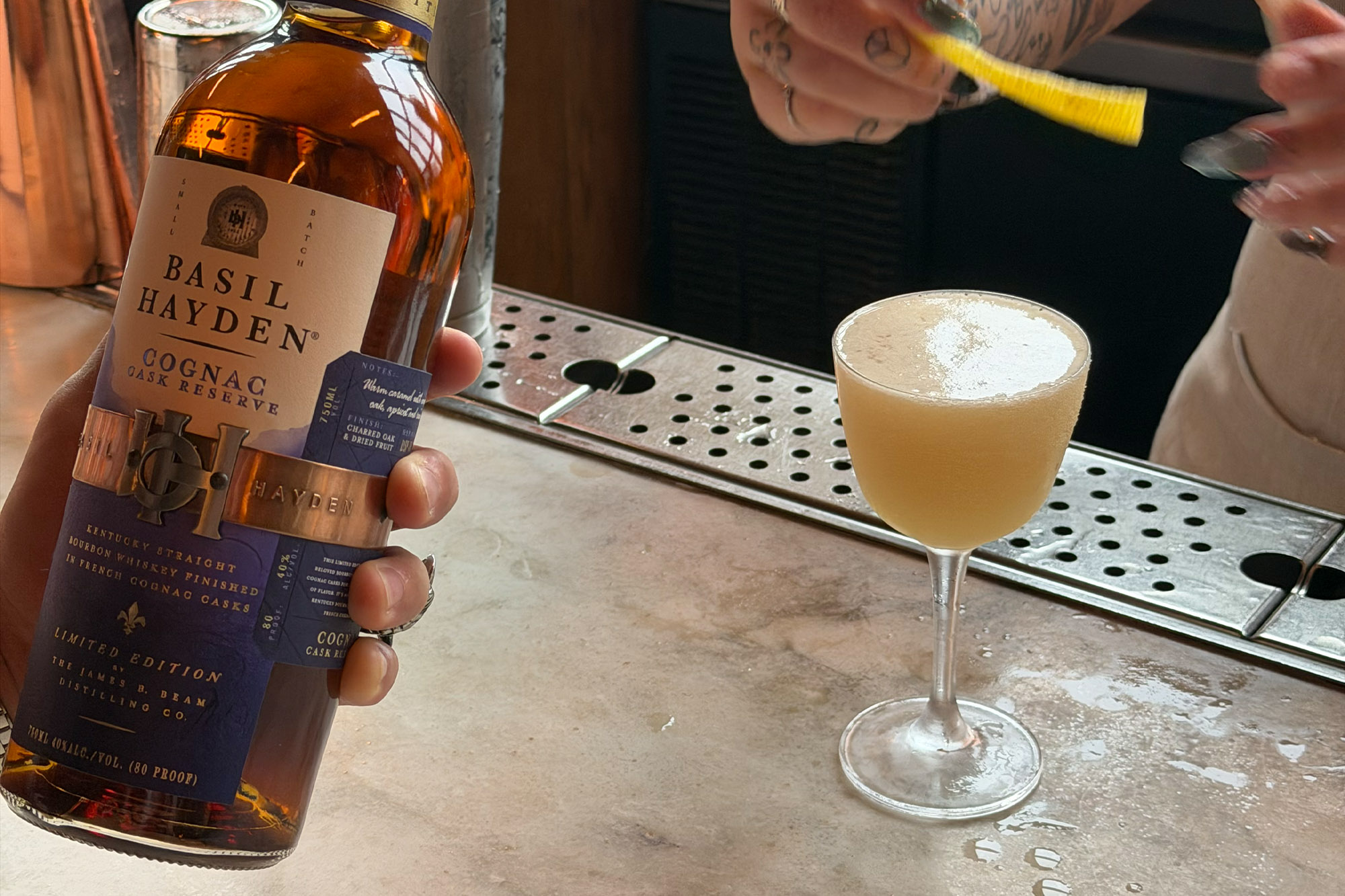
It also works remarkably well in cocktails. In a Sidecar-style drink, the Cognac character feels almost inevitable. In a lighter Watermelon Highball with fresh watermelon juice, soda water, and lime, the whiskey becomes brighter and more relaxed. I had both at a recent dinner at the Wythe Hotel in Williamsburg, Brooklyn, and that was where the bottle really came together for me — enough so that I now frequently recommend it to people looking for a whiskey to mix into cocktails.
I would not hand this to somebody and call it a quintessential American bourbon. It is too grape-forward and perhaps a little too light on its feet for that. But that is also what makes it interesting. Basil Hayden took a familiar 80-proof bourbon, ran it through a few decades of French brandy history, and came out with something that actually tastes different.
For drinkers intrigued by the meeting of American whiskey and French Cognac tradition — particularly those fond of Cognac and fruit-driven spirits — Cognac Cask Reserve is an approachable way into something a little more whimsical than the standard bourbon pour. And given how well it behaves in a cocktail, newcomers to bourbon may actually be among the people who get the most out of it.
BUY Basil Hayden Cognac Cask Reserve: $49.09