Subscribe to receive our daily tech reviews
Lorem ipsum dolor sit amet, consectetur adipiscing elit ut liqua purus sit amet luctus venenatis, lectus magna.


Hades 2 Is a Chaotic, Beautiful Descent Into Greek Myth and Madness
Three years after Hades helped ease my anxiety, I found myself lost in its sequel — a gorgeous, chaotic descent through Greek myth that somehow feels both familiar and brand new.

This article contains affiliate links, which means we may earn a small commission if you make a purchase through them, at no extra cost to you.
There are very few games that offer a true escape for me — the kind that lets you quite literally forget about all your problems and lose yourself for a few hours. When I got diagnosed with my anxiety disorder three years ago, only one game eased my worries — Hades.
I loved the rogue-like dungeon crawler, spending hour after hour trying to beat the game and discovering tidbits of the narrative along the way. So when Hades 2 got a release date on the Nintendo Switch 2, I knew I had to test it and see if it lived up to the original game.
Shop Hades 2 for the Nintendo Switch 2: $49.94
A New Protagonist and Familiar Myth

Hades 2 follows a similar playing style to Hades, now bringing in a new protagonist — Melinoë, who happens to be Hades and Persephone’s daughter and Zagreus’ (the original game’s hero) sister. I love that Greek mythology has just as many gods as Indian mythology — with stories intertwining so consistently, it’s almost hard to keep up.
That chaotic, messy energy is exactly what I love about Hades 2. You start the game with little to no context as to why you’re ready to defeat your grandfather, Chronos, the Titan of Time. You’re quickly thrown into your first battle, learning as you go — fighting everything from wraiths to giant tree-like monsters that love to destroy your health bar.
Stunning Character Design and Storytelling
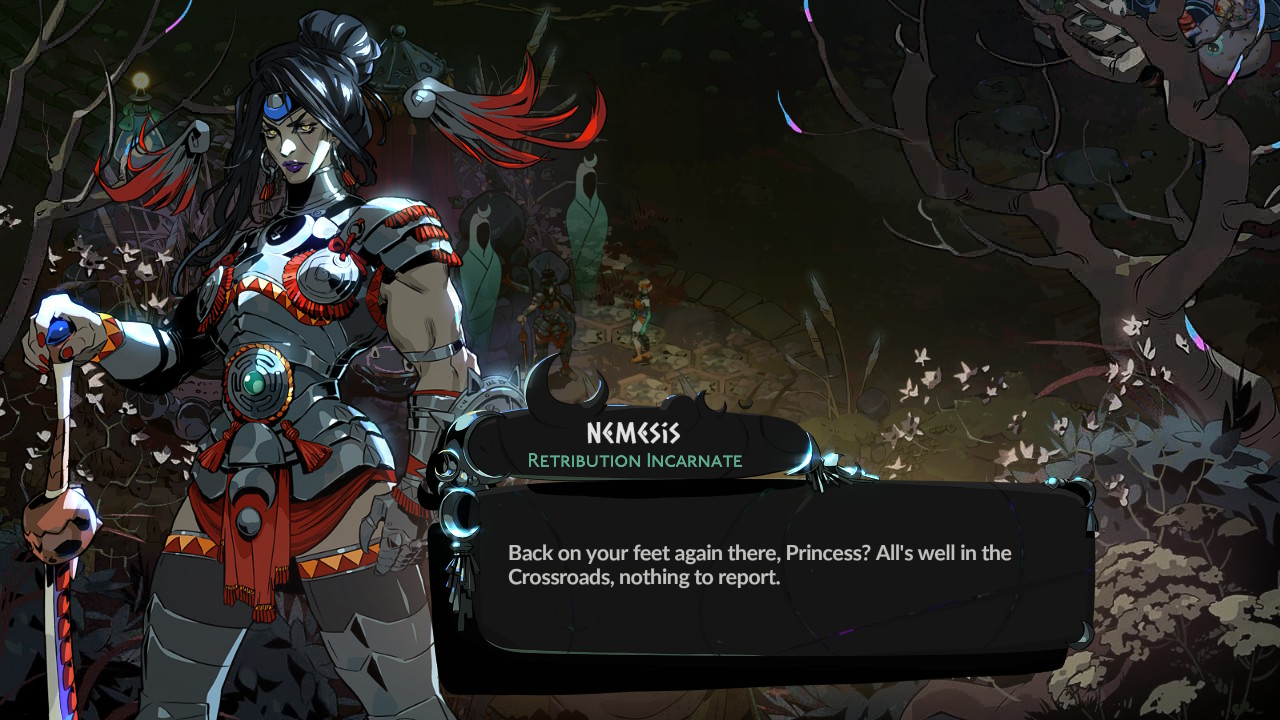
You’re immediately taken in by the stellar character design. Though the game is mostly represented by static images (especially during dialogue), the gorgeous artwork and detail that go into each character make it feel like you’re reading a graphic novel on the big screen — something I truly love.
New characters are introduced too — for example, Nemesis, a rival turned friend with a fascinating arc and story. You also have Hecate, a complicated mother figure for Mel, who seems to care more than she lets on. Each character has layers to their story, which you uncover ever so slightly with each hour played.
The Gameplay: Chaos in Motion
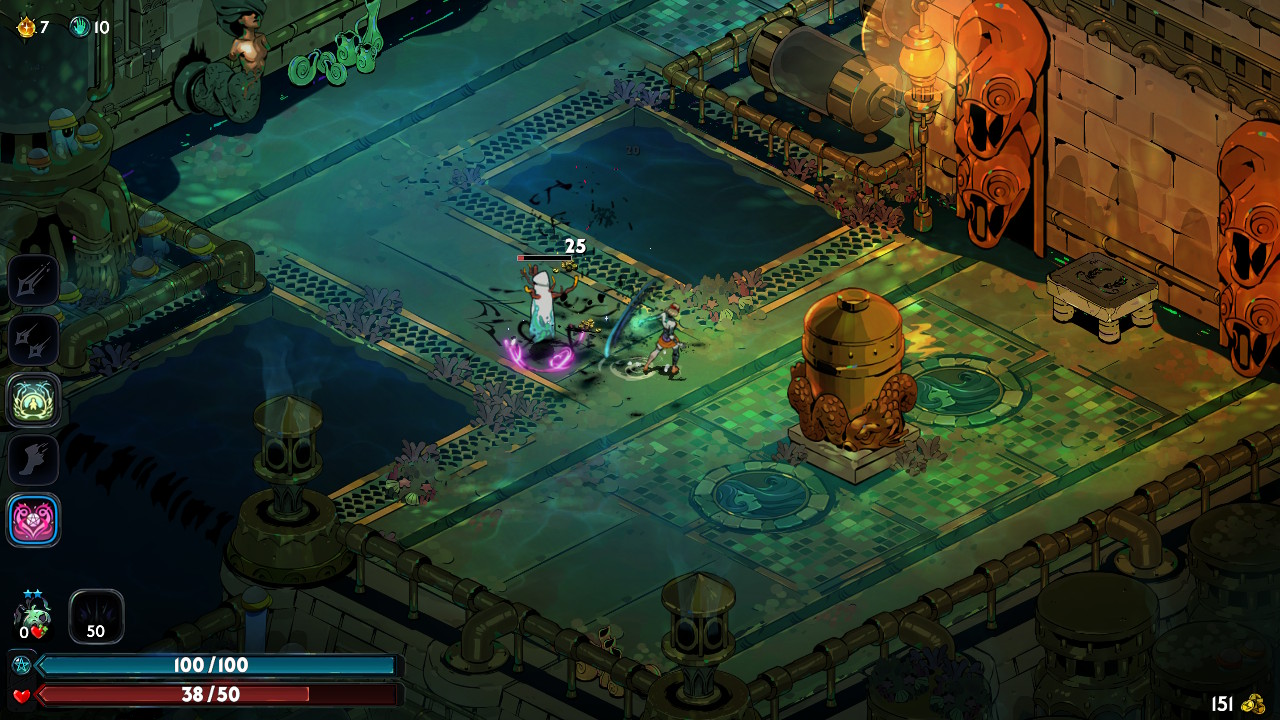
Each run starts off simple and quickly turns chaotic. You’ll face a myriad of bosses, discover new and dangerous monsters, and collect interesting boons from your favorite gods. The best part? No two runs are ever the same, which means the game never feels stale — even after hours of gameplay.
There are so many bosses to battle, and depending on whether you head down to Tartarus to face Chronos or up to Mount Olympus to battle his allies, you’ll continue to discover new dialogue, new rewards, and new upgrades. Trust me — you’ll never battle the same boss back-to-back in consecutive runs.
Boons, Gods, and Strategy
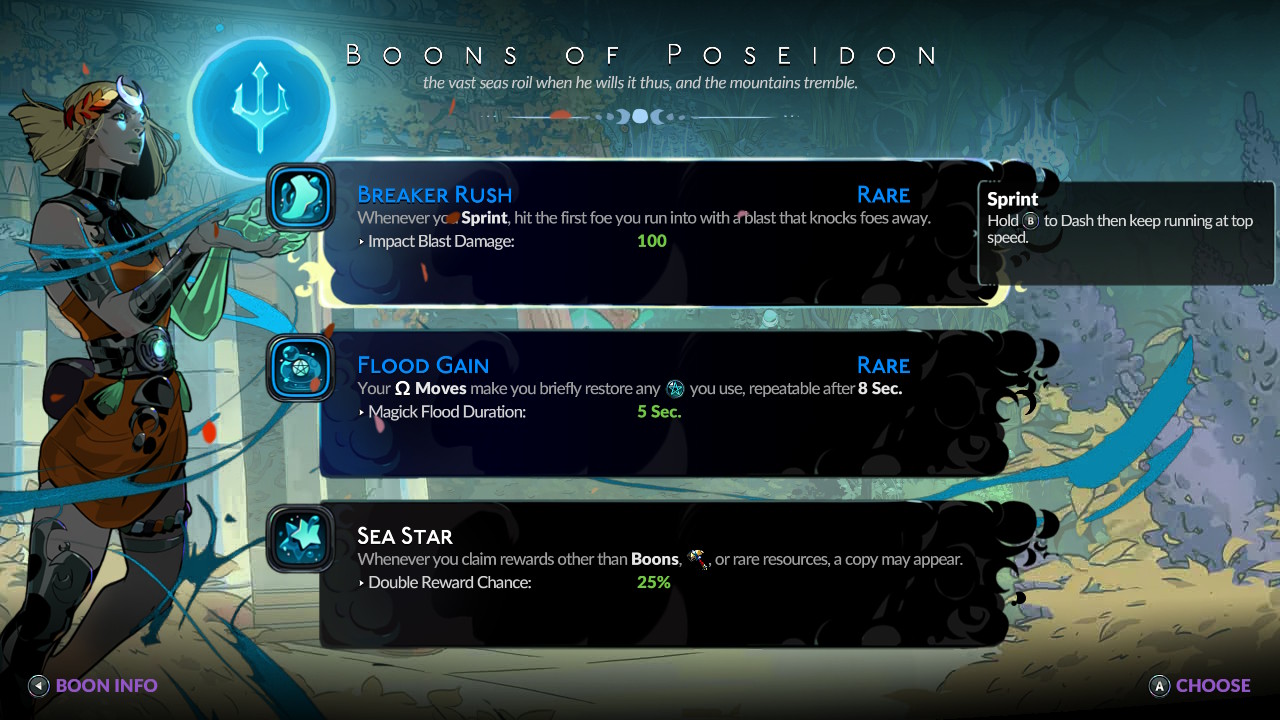
Once you get the hang of the controls (and there aren’t many), the game is easy to learn and devote time to. Yes, it can be hard to decide which upgrades to choose from or which boons will actually satisfy your ultimate vendetta. I think half the fun is not knowing which god you’re going to encounter on your runs.
I personally love meeting Aphrodite and Hera — and Poseidon is always a fun adventure. You can usually pick between a few different boons, including damage upgrades, passive duration boosts, and ability upgrades. Since I’m very damage-oriented, I usually pick those, but you can alter as you please — boons are temporary, after all. They disappear after you die during your run.
Weapons and Combat Style
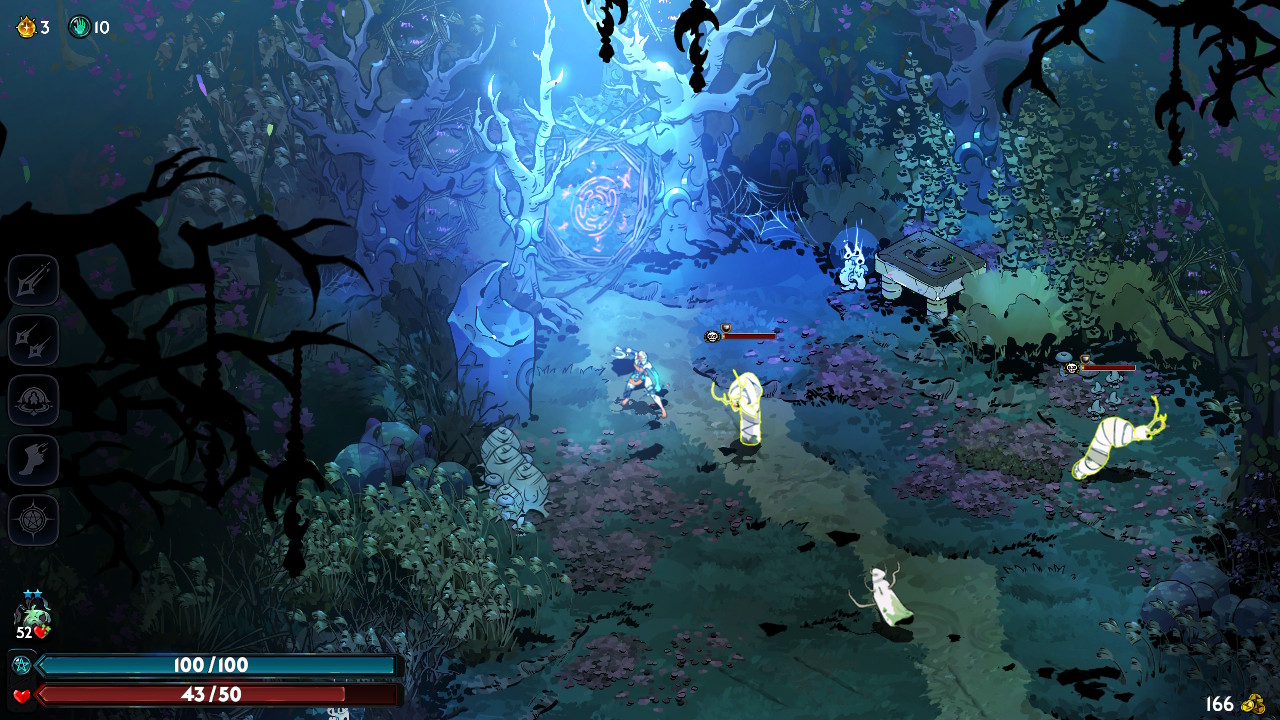
The gameplay itself is surprisingly immersive. I loved watching Mel zip through levels — the slashing sound effects are incredibly satisfying to hear. You can tell the game designers put a lot of thought into building the combat sequences.
I’ll be the first to admit I was so used to Zagreus’ warrior-style gameplay that Mel took some getting used to — I had to be more mindful of the battlefield and use distance to my advantage instead of always attacking upfront.
There are a lot of cool weapons to choose from, including a large, menacing axe — which is slow but fun to use. I also love the Black Coat — it’s kind of like a power suit that works well for both melee and ranged damage. With the right boons, you can complete a level with negligible damage.
That said, all the weapons are pretty fun. A lot of players hate the torches, but these deadly weapons are actually fun to use (albeit challenging) if you pair them with the right boons. They’re slow to hit (often described as death by a thousand paper cuts), but Hades 2 supports a wide variety of play styles. Whether you prefer melee or ranged damage, there are tons of options. You can choose your own build and go off the beaten path to try a weapon you might not have originally chosen for yourself.
That’s the best part — there are so many options and paths to choose from, you’ll never get bored.
The Music: Comic Macabre Perfection

Finally, I love the musical composition of this game. Darren Korb is a great composer, and he brings back the classic Hades tune, modifying it with an edgy, gritty feel. One of the standout moments is the Scylla and the Sirens boss fight, which has its own musical number that changes dramatically as you kill each enemy.
It’s kind of funny and humorous and makes the game feel a little more upbeat than it actually is — I call it “comic macabre.”
The True Magic Lies in the Story
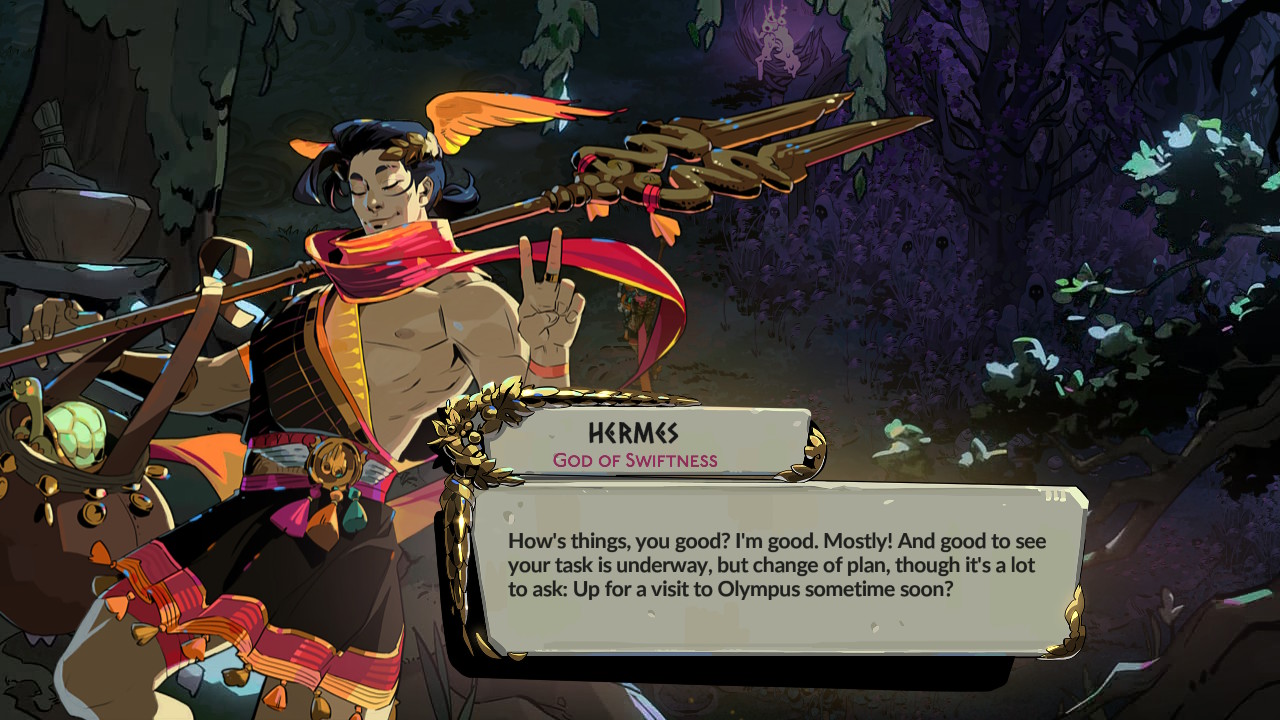
Of course, the reason Hades 2 really succeeds isn’t the dynamics or layers of its battles, but the characters themselves — who build and unravel with each run. I loved discovering Nemesis’ world and unraveling her story. I also liked Melinoë’s relationship with Apollo, which was truly engaging every step of the way.
While many players currently dislike the true ending (saying it came too quickly and didn’t have enough buildup), I liked that it provided the resolution the game was looking for. Hopefully, with Hades 2’s upcoming Patch 1 update, players will have less to complain about regarding the ending — and more to appreciate about the story as a whole.
I won’t spoil it for you, but the ending packs all the dramatic tension and family drama Hades 1 was known for, so you won’t be disappointed on that count.
Verdict
Hades 2 is like everyone’s family drama come to life ×100. It’s delightfully macabre, has so much to uncover, and keeps you guessing until the very last second. Even after discovering the post-credits ending, you’ll find moments where you uncover new narrative branches and dialogue.
The music follows you through each dungeon, guiding you through every sequence. Hades 2 is the kind of game that stays with you long after it’s over. Unlike a typical dungeon crawler, it leaves you with stories, hope, and depth for each narrative character — making you truly feel for them.
As someone who grew up with tales of good versus evil and extremely dramatic mythological stories told at bedtime, Hades 2 fits right in. It doesn’t shy away from giving you a complicated, dramatic, intertwining story that makes the game oh so worth it.
Shop Hades 2 for the Nintendo Switch 2: $49.94